UM + UIM required
Oregon coverage menu: liability, PIP and UM/UIM on every policy
Oregon builds three required coverages into every private passenger policy. Here is what each one pays, where the limits sit and which extra line insurers must have for sale.
By CoverOath Editorial Team Updated 6 min read
The promise, in short
Oregon requires 25/50/20 liability: $25,000 for one injured person, $50,000 for everyone injured in one crash and $20,000 for property damage. Every private passenger policy must also carry personal injury protection, with up to $15,000 for medical expenses, and uninsured motorist coverage that includes underinsurance, at your liability limits unless you choose lower limits in writing, never below 25/50. Insurers must also have uninsured motorist property damage coverage for sale. The Division of Financial Regulation answers insurance questions at 888-877-4894.
- Minimum liability
- 25/50/20
- PIP
- Required, $15,000 medical
- UM/UIM
- Required, at least 25/50
Oregon coverage menu
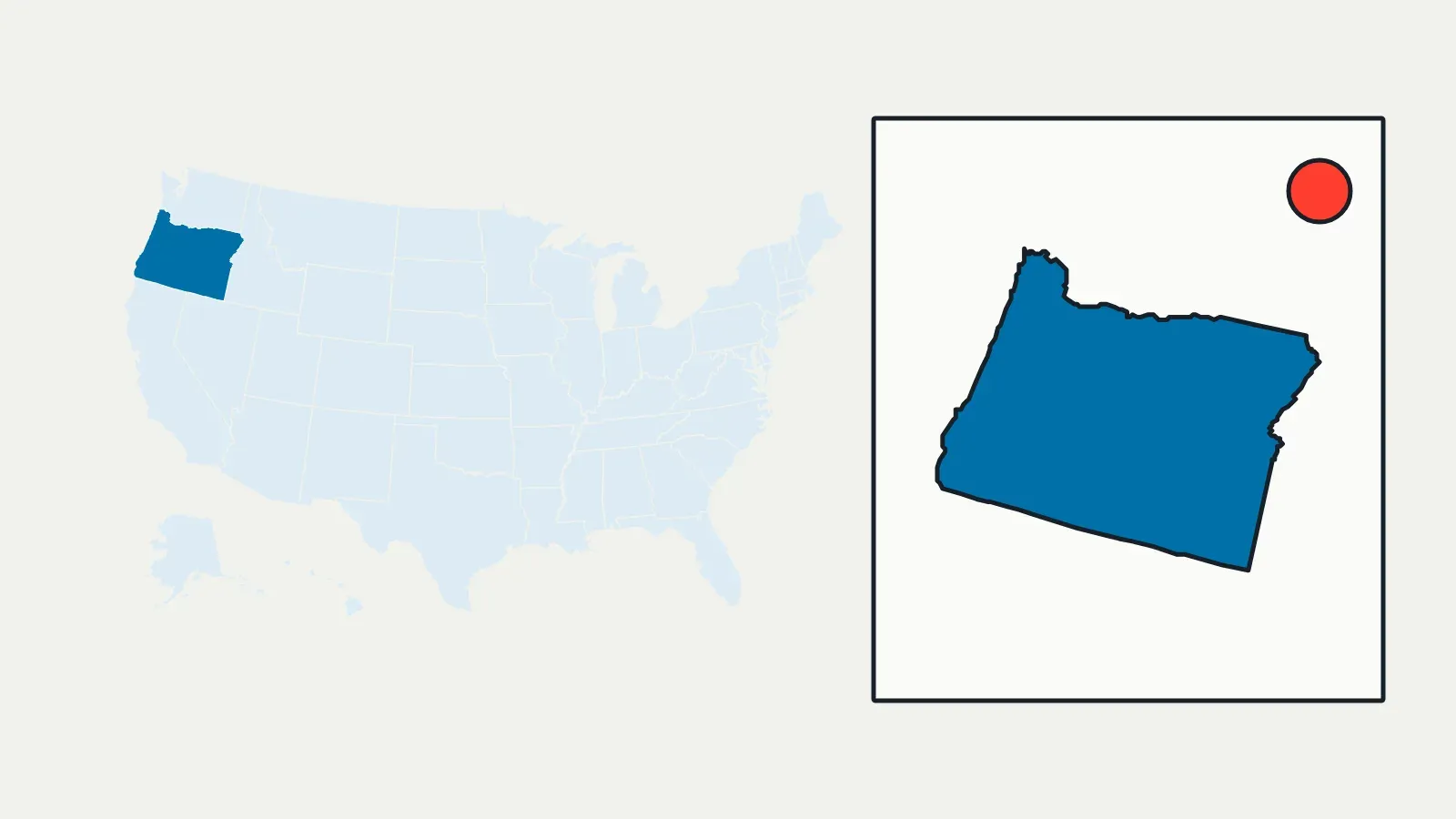
What an Oregon policy must carry
Oregon's financial responsibility amounts are set in ORS 806.070. They are the floor for bodily injury liability and property damage liability, the coverages that pay other people when you cause a crash.
| Coverage | Minimum | Whom it pays |
|---|---|---|
| Bodily injury liability | $25,000 per person / $50,000 per accident | People you injure |
| Property damage liability | $20,000 per accident | Property you damage |
| Personal injury protection | $15,000 medical, plus income and other benefits | People the policy insures, whoever caused the crash |
| Uninsured/underinsured motorist | $25,000 / $50,000 | You, when the at-fault driver has no or too little insurance |
The property damage minimum is $20,000, lower than the $25,000 many states use. A newer car can cost more than that to replace, and anything above your limit is yours to pay. See how much liability coverage you need.
Personal injury protection
ORS 742.520 requires PIP on every motor vehicle liability policy issued in Oregon for a private passenger vehicle. It pays regardless of fault. ORS 742.524 sets the minimum benefits:
- Medical and related expenses incurred within two years of the crash, up to $15,000 a person.
- Income loss at 70% of lost income, up to $3,000 a month for up to 52 weeks, once you have been disabled at least 14 days.
- Essential services you can no longer do yourself, up to $30 a day for up to 52 weeks, after the same 14 days.
- Funeral expenses up to $5,000, incurred within one year of the injury.
- Child care at $25 a day, up to $750, when a parent is hospitalized at least 24 hours.
Insurers may offer a deductible of up to $250 on the medical, income and essential services benefits. The law also lets a personal policy exclude PIP while the driver is providing transportation network services, which matters if you drive for a ride app; see the rideshare endorsement.
Uninsured and underinsured motorist coverage
Under ORS 742.502, a liability policy covering people must include uninsured motorist coverage, and that coverage must include underinsurance. The UM limits match your bodily injury liability limits unless a named insured elects lower limits in writing. You cannot elect less than 25/50.
Hit-and-run
A hit-and-run vehicle under ORS 742.504 is one that injures you through physical contact with you or the car you are in.
Phantom vehicle
A vehicle that never touched you can still count as a phantom vehicle if the facts of the crash are corroborated as the statute requires.
PIP and UM together
PIP payments reduce the damages you claim under UM/UIM, but ORS 742.542 says they do not reduce the UM/UIM policy limits.
Uninsured motorist property damage
ORS 742.510 requires insurers that sell private passenger auto policies to have uninsured motorist property damage coverage for sale, at a limit of at least the $20,000 property damage minimum. It is offered, not built in. The statute leaves the first $300 of a hit-and-run or phantom vehicle claim uncovered, and the first $200 of other claims, and it does not pay for loss of use. If you carry collision, compare the two deductibles before buying it.
Stacking and more than one policy
We found no Oregon statute that lets you add the UM limits of several cars together. ORS 742.504(9) instead sets an order of payment: while you occupy a vehicle owned by a named insured, that policy's coverage is primary; in a vehicle you do not own, your coverage applies only as excess over primary insurance available to you. Whether limits combine beyond that depends on the policy wording. How stacking works explains the terms.
Where to check and complain
- Read your declarations page for your liability, PIP and UM/UIM limits and any PIP deductible.
- Ask the insurer for any signed election of lower UM/UIM limits.
- Call the Division of Financial Regulation consumer hotline at 888-877-4894 if an insurer will not explain a coverage or a claim decision.
Questions drivers ask
Is PIP required in Oregon?
Yes. Every private passenger auto policy issued in Oregon must include PIP, with medical benefits of up to $15,000 a person plus income, essential services, funeral and child care benefits.
Can I reject uninsured motorist coverage in Oregon?
No. UM/UIM is part of every policy covering people. A named insured can choose limits lower than the liability limits in writing, but not below $25,000 per person and $50,000 per accident.
Does Oregon UM coverage pay for damage to my car?
Not the bodily injury part. Insurers must offer separate uninsured motorist property damage coverage, with a $200 or $300 portion of each loss left uncovered.
Is 25/50/20 enough in Oregon?
It meets the law. The $20,000 property damage limit can fall short after hitting a newer car; the liability limits calculator shows the gap.
Drawn from
- Oregon Revised Statutes, chapter 806 (ORS 806.070, financial responsibility amounts), 2025 edition
- Oregon Revised Statutes, chapter 742 (UM/UIM: ORS 742.500–742.510; PIP: ORS 742.520–742.542), 2025 edition
- Oregon Division of Financial Regulation — Auto insurance 101
- Oregon Division of Financial Regulation — Contact us
Facts on this page were checked against these sources on November 15, 2026. The limits come from the 2025 edition of the Oregon Revised Statutes; check the Legislature's site for any later amendments.
Have this coverage priced
CoverOath doesn't sell insurance. Answer five questions and CoverOath passes your request to licensed insurance agents and insurers, who can quote the coverage; you decide whether to buy anything.
- 1 The coverage you want priced.
- 2 Where an agent can reach you, and your consent.
- 3 A licensed insurance agent or insurer contacts you with a quote. Nothing is bought until you agree.
CoverOath is not paid by you. The licensed insurance agents and insurers who contact you set their own prices and terms. How we make money.
Adjacent layers
-
Core coverage
Personal injury protection (PIP)
Pays medical bills and lost income whoever caused the crash. Mandatory in the 12 no-fault states.
-
Core coverage
Uninsured motorist coverage (UM)
Pays your injuries when an uninsured or hit-and-run driver is at fault. Required in about 20 jurisdictions.
-
Core coverage
Uninsured motorist property damage (UMPD)
Pays to fix your car when an identified uninsured driver is at fault. California caps it at $3,500.