Car damage
Uninsured motorist property damage: your car, when the other driver has nothing
Uninsured motorist coverage is mostly about injuries. UMPD is the smaller, separate promise that pays for your car. Whether you can buy it, how much it pays and when it refuses a claim are set state by state.
By CoverOath Editorial Team Updated 6 min read
The promise, in short
Uninsured motorist property damage (UMPD) pays to repair or replace your car, and in some states property inside it, when an at-fault driver with no liability insurance hits you. In many states it pays only when that driver is identified, so a hit-and-run often falls to collision instead. Some states fold UMPD into UM, some make insurers offer it, and some have no UMPD rule at all; limits run from a few thousand dollars to your property damage liability limit, usually with a small deductible. If you carry collision, compare the two before you buy. Your state menu shows the local rule.
- Pays for
- Your car and property
- Usual condition
- Driver identified
- California limit
- $3,500
- Main alternative
- Collision coverage
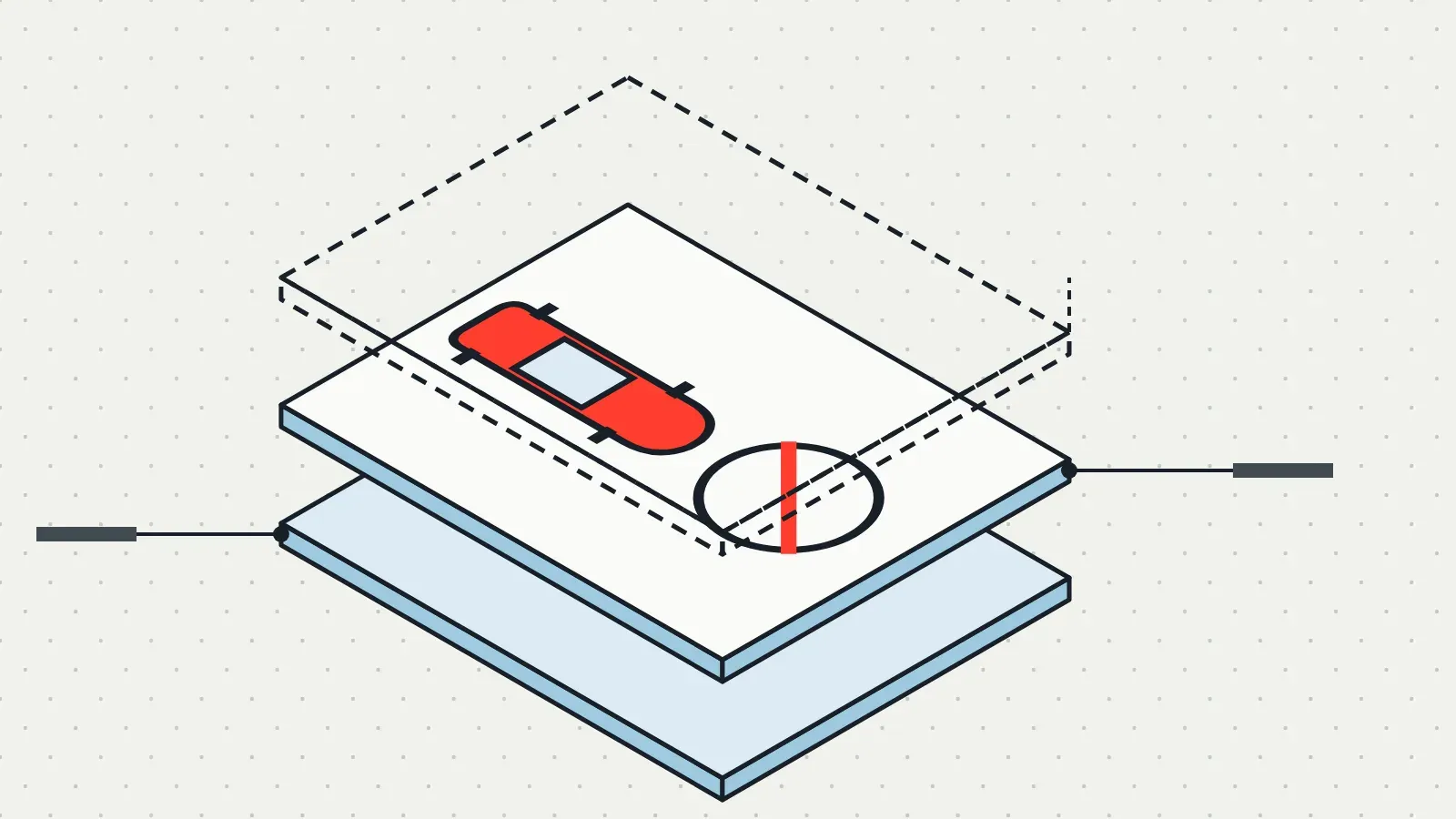
What UMPD promises
When another driver damages your car, their property damage liability coverage is supposed to pay. If they have none, you are left with a claim against a person who may not be able to pay it. UMPD puts your own insurer in that driver's place for the car, the way uninsured motorist bodily injury does for your injuries.
The Illinois Department of Insurance defines it narrowly: it covers damage to your vehicle caused by an identified, at-fault, uninsured driver. Each of those three words is a condition you may have to prove.
- Identified: you can name the driver or the vehicle, not just describe it.
- At fault: the other driver caused the crash, under your state's fault rules.
- Uninsured: that driver had no liability coverage that applies.
Where UMPD exists
There is no single national rule. Our state menu pages sort the states into three broad groups, based on each state's UM statute.
Part of UM
UM includes property damage. Georgia, Maryland, North Carolina, Virginia and Vermont write it into the uninsured motorist coverage itself, each with its own limit or deductible.
Must be offered
The insurer has to make it available and you decide. Illinois, Indiana, Arkansas, Alaska and Oregon are in this group.
No UMPD rule
The UM statute covers injuries only. In Kansas and Minnesota, for example, damage from an uninsured driver usually goes to collision coverage.
The groups have edges. Louisiana requires UMPD on written request only when your policy has no collision coverage. Mississippi includes it with UM and lets you reject it separately, but rejecting UM bodily injury ends UMPD too.
Limits and deductibles
| State | Limit | Deductible or condition |
|---|---|---|
| California | $3,500 | Pays only if the uninsured driver is identified |
| Vermont | Up to $10,000 a claim | $150 |
| New Jersey | Up to $25,000 per accident | $500; does not apply to hit-and-run vehicles |
| North Carolina | Your property damage liability limit | $100 |
| Indiana | Set by the policy | None, or up to $300 if offered; waived for a legally parked car |
| Washington | Set by the policy | Up to $100; up to $300 for hit-and-run or phantom vehicles |
Two patterns stand out. Low statutory caps, such as California's $3,500 or Vermont's $10,000, can fall well short of a newer car's repair bill; the part above the cap goes to collision, if you carry it, or to you. And the UMPD deductibles in these statutes are a few hundred dollars at most. Compare them with the collision deductible on your own declarations page.
What the limit buys also varies. Indiana's UMPD pays for damage to your car and to your personal property in it, and Georgia's UM property damage reaches personal property inside the car as well. Other policies limit the payment to the vehicle. Where a state sets only a floor, such as Oregon's requirement that insurers have UMPD for sale at no less than the $20,000 property damage minimum, the insurer's endorsement sets the rest, including how a total loss is valued.
Hit-and-run and other limits
The identified-driver rule is where most UMPD claims fail. California's guide says UMPD pays only when the uninsured driver is identified. Indiana's statute asks for the at-fault driver's name and address and proof that the driver had no liability insurance. Illinois lets insurers also require actual physical contact with your car.
- Hit-and-run: usually not UMPD. Some states differ: Washington's coverage reaches hit-and-run and phantom vehicles with a higher deductible, and Georgia accepts an unknown driver with physical contact or a corroborating eyewitness.
- Loss of use: Indiana's UMPD does not pay for the time you are without your car; check your policy for rental terms.
- Police report: the Texas Department of Insurance warns that UM will not pay for a hit-and-run you did not report to police.
- Other exclusions: read the UM endorsement's exclusions section; wording differs by insurer.
UMPD or collision
Collision coverage pays for damage to your car in a crash whoever caused it, up to the car's actual cash value, after your deductible. UMPD overlaps with it only in one case: an identified uninsured driver at fault. California's guide says you may not need UMPD if you have collision coverage.
- No collision on the car: UMPD may be the only coverage for damage from an uninsured driver.
- Collision with a high deductible: UMPD's smaller deductible can matter, if your policy lets UMPD pay first.
- Collision with a low deductible: UMPD adds less, especially where its limit is capped low.
When both apply, the policy wording decides which pays first and whether UMPD reimburses your collision deductible. Ask your insurer before you rely on either.
How to check yours
- Find the line. On the declarations page, UMPD may be its own line or folded into UM with a property damage limit.
- Read the limit and deductible. Compare the limit with your car's value.
- Read the conditions. Look for identified-driver, physical-contact and police-report rules in the UM endorsement.
- Decide with collision in view. If you drop collision on an older car, ask whether UMPD is available in your state.
Questions drivers ask
Does UMPD cover a hit-and-run?
Often not. Many states and policies require the uninsured driver to be identified, and California, Indiana and New Jersey leave hit-and-run vehicles out. Washington and Georgia are exceptions with conditions. Collision coverage is the usual answer for a hit-and-run.
Do I need UMPD if I have collision coverage?
California's insurance department says you may not. UMPD can still help where its deductible is lower than your collision deductible, but its limit may be capped low. Read how your policy coordinates the two.
Does UMPD pay for a rental car while mine is repaired?
Not necessarily. Indiana's UMPD excludes loss of use. Check your policy, or look at rental reimbursement.
Is UMPD the same as uninsured motorist coverage?
It is the property part. In some states it comes inside UM; in others it is a separate option. UM bodily injury pays your injuries; see uninsured motorist coverage.
Drawn from
- Illinois Department of Insurance — Auto insurance definitions (uninsured motorist property damage)
- California Department of Insurance — Automobile insurance guide (uninsured motorist property damage)
- Ind. Code § 27-7-5-3, uninsured motorist property damage and deductible (Justia)
- 215 ILCS 5/143a, uninsured motorist and UM property damage
- N.J.S.A. 17:28-1.1, UM/UIM and UM property damage (Justia, 2025 edition)
- N.C. Gen. Stat. §20-279.21(b)(3), uninsured motorist coverage including property damage
- 23 V.S.A. §941, uninsured, underinsured and insolvent insurer coverage (Vermont General Assembly)
- RCW 48.22.030, underinsured, hit-and-run and phantom vehicle coverage (Washington State Legislature)
- O.C.G.A. § 33-7-11, uninsured motorist coverage, property damage and deductibles (2025 Code of Georgia, Justia)
- Oregon Revised Statutes, chapter 742 (UM/UMPD: ORS 742.500–742.510), 2025 edition
- Texas Department of Insurance — Auto insurance guide (hit-and-run and police reports)
Facts on this page were checked against these sources on November 15, 2026. State limits and deductibles come from the statutes cited on our state menu pages; insurers' UM endorsements add their own conditions, so read yours.
Have this coverage priced
CoverOath doesn't sell insurance. Answer five questions and CoverOath passes your request to licensed insurance agents and insurers, who can quote the coverage; you decide whether to buy anything.
- 1 The coverage you want priced.
- 2 Where an agent can reach you, and your consent.
- 3 A licensed insurance agent or insurer contacts you with a quote. Nothing is bought until you agree.
CoverOath is not paid by you. The licensed insurance agents and insurers who contact you set their own prices and terms. How we make money.
Adjacent layers
-
Core coverage
Uninsured motorist coverage (UM)
Pays your injuries when an uninsured or hit-and-run driver is at fault. Required in about 20 jurisdictions.
-
Core coverage
Collision coverage
Pays to fix or replace your car after a crash, at fault or not, minus your deductible and up to its value.
-
Fine print
Car insurance exclusions
Intentional damage, paid rides and deliveries, wear and breakdowns: what personal auto policies commonly leave out.