UM + UIM required
North Dakota coverage menu: four required coverages and a firm no-stacking rule
North Dakota is a no-fault state that also puts uninsured and underinsured motorist coverage on every policy. Here is what each required line pays, where the limits stop and how the state handles rideshare drivers.
By CoverOath Editorial Team Updated 7 min read
The promise, in short
North Dakota requires 25/50/25 liability, $30,000 of basic no-fault (PIP) per person, uninsured motorist coverage at 25/50 and underinsured motorist coverage equal to your UM limits. UM/UIM pays for injuries, not damage to your car, and the statute bars stacking limits across vehicles. The North Dakota Insurance Department regulates insurers and answers consumer calls at 701-328-2440.
- Minimum liability
- 25/50/25
- PIP
- $30,000 no-fault required
- UM/UIM
- Both required at 25/50
North Dakota coverage menu
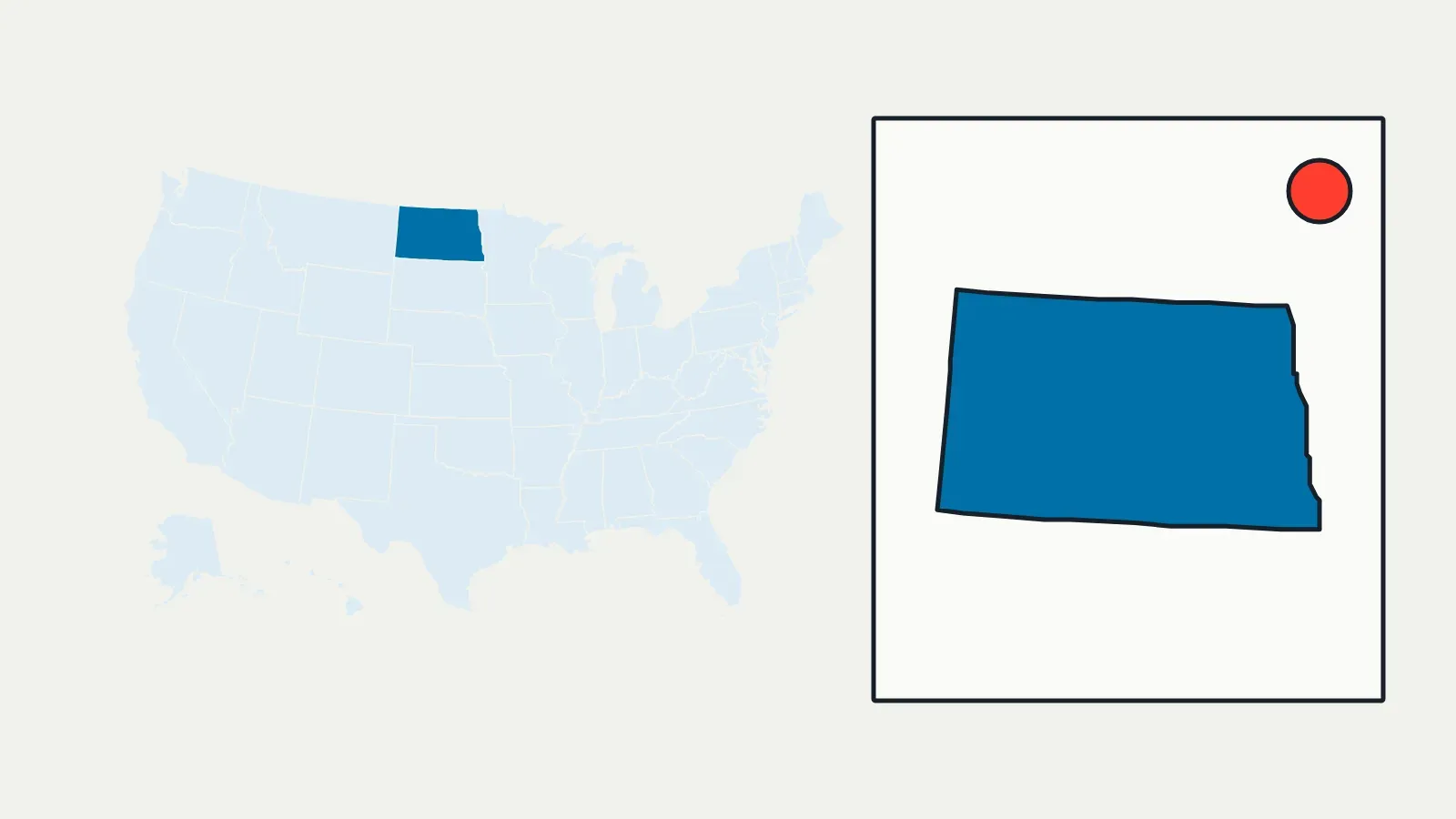
What a North Dakota policy must carry
The North Dakota Insurance Department lists five required lines: bodily injury liability, property damage liability, uninsured motorist, underinsured motorist and basic no-fault. The liability floor comes from NDCC 39-16.1-11.
| Coverage | Minimum | What it pays |
|---|---|---|
| Bodily injury liability | $25,000 / $50,000 | People you injure, per person / per accident |
| Property damage liability | $25,000 | Other people's cars and property |
| Uninsured motorist | $25,000 / $50,000 | Your injuries caused by an uninsured driver |
| Underinsured motorist | Equal to UM | Your injuries beyond an at-fault driver's limits |
Liability pays other people. The minimums are a floor, and a serious crash can pass $50,000 quickly, and anything above your limits is yours to pay. If you compare prices before choosing limits, the Insurance Department publishes an auto insurance cost comparison survey, and the 2026 edition is linked from its auto insurance page. The liability limits page shows how people choose higher ones.
No-fault PIP, $30,000 per person
Every car registered in North Dakota needs basic no-fault security. It pays up to $30,000 per injured person for economic loss from one accident, whoever caused it. You can suspend it, pro rata, if a car stays off public roads for at least 30 days in a row.
- Medical and rehabilitation costs, within the $30,000.
- Work loss: 85% of lost income, capped at $150 a week.
- Replacement services, such as paid household help, up to $15 a day.
- Funeral, cremation and burial, up to $3,500, plus survivors' benefits.
Insurers must offer optional excess no-fault benefits, up to $80,000 in total per person. You keep the right to sue for pain and suffering only for a serious injury, which the statute defines to include death, serious permanent disfigurement or disability beyond 60 days, or medical bills over $2,500. See personal injury protection.
UM and UIM in North Dakota
Uninsured motorist
Every policy on a car registered and principally garaged in North Dakota must include UM at 25/50 or more. If you ask, the insurer must sell higher limits, up to your liability limits or 100/300, whichever is less.
Underinsured motorist
UIM must be provided at the same limits as your UM. It pays your injury damages when the at-fault driver's liability limits run out.
- Injuries only. The Insurance Department notes that UM does not cover physical damage to your car; collision does that.
- Hit-and-run. An unidentified driver counts as uninsured only if there was physical contact with you or the car you were in, or a disinterested witness independently confirms what happened.
- Report it. The coverage does not apply if you did not report the accident to law enforcement as soon as practicable.
Rideshare drivers in North Dakota
North Dakota has had a transportation network company law since 2015. Per the Insurance Department, while a driver is logged in and waiting for a request, the company or driver must carry at least $50,000 per person, $100,000 per incident and $25,000 for property damage, plus UM, UIM and PIP. From the moment a ride is accepted until the passenger gets out, the requirement is $1 million. The Department adds that most personal policies in the state exclude ride-hailing, so a driver may need a TNC-specific rideshare endorsement.
Where to check and complain
- Read your declarations page to confirm your liability, no-fault, UM and UIM limits.
- Ask about excess no-fault if $30,000 seems low next to your health coverage.
- Contact the North Dakota Insurance Department at 701-328-2440 or insurance@nd.gov if an insurer will not explain a coverage or a claim decision.
Questions drivers ask
Is uninsured motorist coverage required in North Dakota?
Yes. Every policy must include UM at 25/50 or more, and UIM at the same limits as your UM.
Can I stack UM/UIM coverage in North Dakota?
No. The statute bars stacking limits across vehicles, regardless of how many premiums you pay.
How much PIP does North Dakota require?
$30,000 per person of basic no-fault benefits. Insurers must also offer optional excess no-fault coverage.
Does North Dakota UM pay for damage to my car?
No. It covers injuries only. Damage to your car is a collision coverage claim.
Drawn from
- North Dakota Insurance Department — Auto insurance
- N.D. Cent. Code ch. 26.1-40 (UM: §26.1-40-15.2; UIM: §26.1-40-15.3; stacking: §26.1-40-15.4)
- N.D. Cent. Code ch. 26.1-41 (no-fault: §§26.1-41-01, 26.1-41-04)
- N.D. Cent. Code §39-16.1-11 (minimum liability limits)
Facts on this page were checked against these sources on November 15, 2026. The ban on stacking UM/UIM limits is in NDCC 26.1-40-15.4.
Have this coverage priced
CoverOath doesn't sell insurance. Answer five questions and CoverOath passes your request to licensed insurance agents and insurers, who can quote the coverage; you decide whether to buy anything.
- 1 The coverage you want priced.
- 2 Where an agent can reach you, and your consent.
- 3 A licensed insurance agent or insurer contacts you with a quote. Nothing is bought until you agree.
CoverOath is not paid by you. The licensed insurance agents and insurers who contact you set their own prices and terms. How we make money.
Adjacent layers
-
Core coverage
Personal injury protection (PIP)
Pays medical bills and lost income whoever caused the crash. Mandatory in the 12 no-fault states.
-
Core coverage
Underinsured motorist coverage (UIM)
Pays your injuries above the at-fault driver's limit. Added-on UIM stacks on their payment; offset UIM subtracts it.
-
Fine print
Stacking UM/UIM coverage
Whether UM limits on several cars add up. Pennsylvania and Florida stack by default; California bans it.