Offer, reject in writing
Colorado coverage menu: liability required, UM/UIM and $5,000 MedPay on by default
Colorado requires liability, then puts uninsured/underinsured motorist coverage and $5,000 of medical payments coverage on the policy unless you reject them. Here is what each line does.
By CoverOath Editorial Team Updated 6 min read
The promise, in short
Colorado requires 25/50/15 liability: $25,000 per injured person, $50,000 per crash and $15,000 for property damage. Uninsured/underinsured motorist coverage is included unless you reject it in writing, and medical payments coverage of $5,000 is included unless you reject it in writing or in the same way you applied. There is no PIP. The Colorado Division of Insurance answers at 303-894-7499 or, outside the Denver metro area, 800-930-3745.
- Minimum liability
- 25/50/15
- MedPay
- $5,000, reject in writing
- UM/UIM
- Included unless rejected
Colorado coverage menu
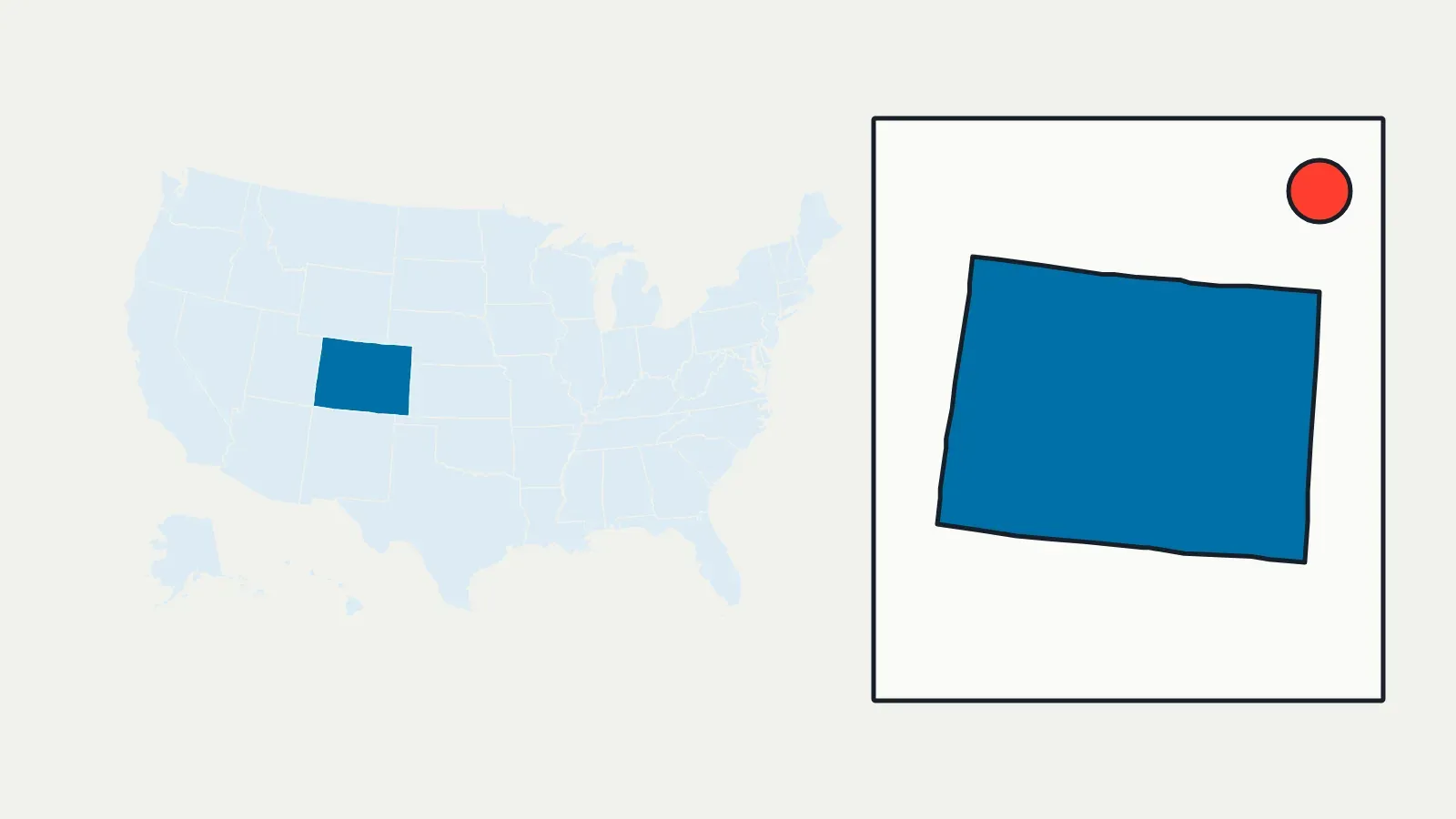
What a Colorado policy must carry
The Colorado Division of Insurance lists these as the minimum liability limits. Liability pays the people you injure and the property you damage when a crash is your fault. It does not pay your own medical bills or your own car.
| Coverage | Minimum | What it pays |
|---|---|---|
| Bodily injury, per person | $25,000 | One injured person's claim |
| Bodily injury, per accident | $50,000 | Everyone injured in one crash |
| Property damage, per accident | $15,000 | Other people's cars and property |
A $15,000 property damage limit may not cover one newer car, and anything above your limits is yours to pay. The liability limits guide explains how people choose higher ones.
UM/UIM, included unless rejected
Under C.R.S. §10-4-609, every auto liability policy includes uninsured motorist coverage, and the named insured may reject it in writing. In Colorado, that coverage also pays when the at-fault driver is underinsured: insured at the time of the crash, but for less than your damages.
Limits up to your liability limits
The insurer must offer UM/UIM at limits equal to your bodily injury liability limits. It does not have to offer more than those limits.
No setoff
UM/UIM is not reduced by other coverage you collect, such as the at-fault driver's liability insurance, your medical payments coverage or health insurance.
One multi-car policy
When one policy covers several vehicles for a single premium, UM/UIM may be limited to applying once per accident.
Medical payments, $5,000 by default
Colorado has no personal injury protection requirement. Instead, C.R.S. §10-4-635 requires medical payments coverage with $5,000 of benefits on every policy unless a named insured declines it in writing or in the same medium used for the application.
- Proof of rejection. The insurer must keep proof of a rejection for at least three years. If it never offered the coverage or cannot show a proper rejection, the policy is presumed to include $5,000.
- Trauma care first. After notice of a crash, the insurer holds $5,000 for up to 30 days to pay emergency providers in a set order: ambulance and air ambulance, trauma physicians, then trauma centers.
- No subrogation. The insurer generally cannot recover the benefits it paid from the at-fault driver, except for benefits paid because of fraud.
- Not for every vehicle. The section does not apply to motorcycles, low-power scooters, off-road vehicles and some others.
Stacking in Colorado
The Colorado statute addresses one case: a single policy covering several vehicles for one premium may apply its UM/UIM once per accident. It does not set a rule for separate policies, so how they combine depends on their wording and on court decisions. Read the limit of liability and other insurance sections. How stacking works explains the terms.
Optional coverages Colorado drivers add
- Collision and comprehensive for your own car. A lender or lease company will require both; comprehensive is the line that answers for hail. See comprehensive coverage.
- Higher MedPay limits. The $5,000 is the required default, not a ceiling; the statute does not limit higher amounts an insurer offers.
- Rental reimbursement while a covered repair is done. See rental reimbursement.
- Gap coverage on a financed car whose loan is larger than its value. See gap insurance.
Colorado also has a liability limits request process under C.R.S. §10-3-1117. An insurer that receives a proper request must send, within 30 days, the insurer's name, the insureds' names, the liability limits and a copy of the policy. Knowing the other driver's limits tells you whether an underinsured claim is likely. The Division's policy information request page has the form.
Where to check and complain
- Read your declarations page for your liability limits, UM/UIM and medical payments.
- Ask the insurer for proof of any rejection if UM/UIM or MedPay is missing.
- Contact the Colorado Division of Insurance at 303-894-7499, or 800-930-3745 outside the Denver metro area, if an insurer will not explain a coverage or claim decision.
Questions drivers ask
Is uninsured motorist coverage required in Colorado?
It is included in every policy unless a named insured rejects it in writing. In Colorado it also covers underinsured drivers.
Is medical payments coverage required in Colorado?
Insurers must include $5,000 of medical payments coverage unless you reject it in writing or in the same way you applied. Without proof of a rejection, the policy is presumed to include it.
What is the minimum car insurance in Colorado?
25/50/15 liability: $25,000 per person, $50,000 per accident and $15,000 for property damage.
Does Colorado have PIP?
No. Colorado uses medical payments coverage of $5,000, included unless rejected, instead. See PIP for how the two differ.
Drawn from
- Colorado Division of Insurance — Auto insurance
- Colorado Division of Insurance — Liability limits requests (C.R.S. §10-3-1117)
- C.R.S. §10-4-609, uninsured motorist coverage (Justia, 2022 edition)
- C.R.S. §10-4-635, medical payments coverage (Justia, 2023 edition)
Facts on this page were checked against these sources on November 15, 2026. The statutes were read in Justia's 2022 and 2023 editions of the Colorado Revised Statutes; confirm current wording on the Colorado General Assembly site.
Have this coverage priced
CoverOath doesn't sell insurance. Answer five questions and CoverOath passes your request to licensed insurance agents and insurers, who can quote the coverage; you decide whether to buy anything.
- 1 The coverage you want priced.
- 2 Where an agent can reach you, and your consent.
- 3 A licensed insurance agent or insurer contacts you with a quote. Nothing is bought until you agree.
CoverOath is not paid by you. The licensed insurance agents and insurers who contact you set their own prices and terms. How we make money.
Adjacent layers
-
Core coverage
Medical payments coverage (MedPay)
Pays crash medical and funeral costs for you and passengers, whoever was at fault. Required in Maine and New Hampshire.
-
Core coverage
Uninsured motorist coverage (UM)
Pays your injuries when an uninsured or hit-and-run driver is at fault. Required in about 20 jurisdictions.
-
Fine print
How much liability coverage you need
State floors run as low as 15/30/5. Size your limit to what you own and earn, then add an umbrella if needed.