Policy anatomy
Parts of an auto policy: a map of the contract you signed
Your policy is not one promise but several, bound together with definitions, exclusions and rules. Here is the order they usually come in and what each part decides.
By CoverOath Editorial Team Updated 7 min read
The promise, in short
A personal auto policy has three physical pieces: the declarations page (your names, cars, limits, deductibles and premium), the policy form (the printed contract shared by many customers) and any endorsements that change that form for you. Inside the form, many policies follow the ISO personal auto policy format: definitions, then separate parts for liability, medical payments, uninsured motorists and damage to your car, then your duties after a loss and the general rules. Each coverage part has its own insuring promise and its own exclusions, so read them together.
- Read first
- Declarations page
- The contract is
- 3 pieces, kept together
- Coverage parts
- Usually A to D
- Changes added by
- Endorsements
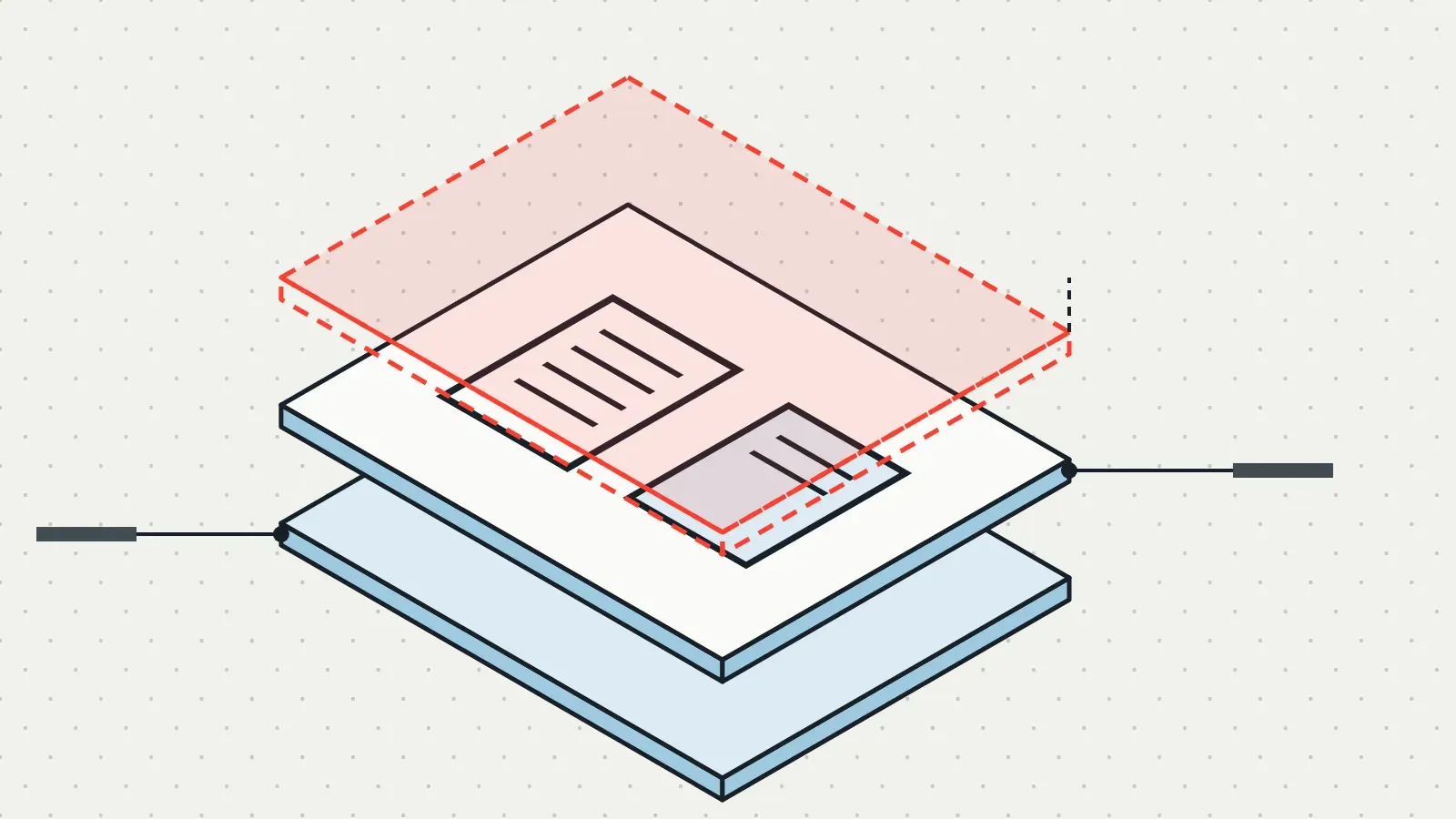
The three pieces of paper
When an insurer sends your policy, it usually arrives as a bundle. The Maryland Insurance Administration's sample declarations page carries a line that sums it up: the policy consists of the declarations page, any endorsements and the policy form, and you should keep them together. Each piece answers a different question.
Declarations page
What you bought: the named insured, the policy period, each car, each coverage with its limit and deductible, the premium, discounts, any lender, and a list of the forms that make up the policy.
Policy form
How the promises work: definitions, insuring agreements, exclusions and conditions. The same printed form is used for many customers of the same insurer in a state.
Endorsements
Changes to the form for your policy: added coverage, removed coverage, or state-required wording. See endorsements and riders.
The Washington Office of the Insurance Commissioner says the declarations page lists the forms that are part of the policy. That list is the table of contents for your contract. If a form number is on it, that form applies to you; if an endorsement you were promised is missing from it, ask before you need a claim.
The declarations page, line by line
The NAIC calls the declarations page the place where the policy begins. It shows the policy number, the term and the limits, describes the insured vehicles, and names any lender with a loan on the car as the loss payee. The Missouri Department of Commerce and Insurance adds that it shows the premium and your rating information.
- Named insured and address. The person or couple the contract is with. Several definitions later in the form are built on this name.
- Policy period. Coverage starts and ends on the dates and times printed here, not on the day you pay.
- Vehicles. Year, make, model and VIN of each covered car. A car missing from this list may still be covered for a short time under newly acquired vehicle wording, but do not count on it.
- Coverages, limits and deductibles. One row per coverage, per car. A blank or a dash means you do not have it.
- Drivers and exclusions. Some insurers list rated drivers here, and any driver excluded by name.
- Loss payee or lienholder. The lender that is paid on a physical damage claim alongside you.
Inside the policy form
Many policies follow the ISO personal auto policy format; others use their own forms, often in a similar order. The NAIC describes the policy as divided into sections, each with an insuring agreement that says what is covered and exclusions that say what is not.
| Part | What it promises | Read with |
|---|---|---|
| Definitions | Meaning of words like you, family member, your covered auto | Every other part |
| Part A: Liability | Pays others for injuries and damage you cause, and pays for your defense | Bodily injury liability |
| Part B: Medical payments | Pays medical bills for you and your passengers, whoever is at fault | MedPay |
| Part C: Uninsured motorists | Pays your injuries when an uninsured or hit-and-run driver is at fault | UM coverage |
| Part D: Damage to your auto | Collision and other-than-collision (comprehensive) losses to your car | Collision |
| Duties after an accident or loss | What you must do for a claim to be paid | Your claim |
| General provisions | Policy period, territory, cancellation, changes, fraud | The whole policy |
States add their own pieces. Coverages a state requires that the base form does not include, such as personal injury protection in a no-fault state, may be added by a state endorsement rather than a lettered part.
Definitions, insuring agreements and exclusions
The definitions section is short and decides more than its length suggests. Words printed in bold or in quotation marks elsewhere in the form carry the meaning given there. Whether a stepchild at college or a roommate is a family member, or whether a borrowed truck is your covered auto, is answered in that section, not in the coverage part. See who is covered on your policy.
Each coverage part then opens with an insuring agreement. The Missouri department describes it as the statement of what losses the policy will cover; for liability it also includes the insurer's promise to defend you, up to the policy limits. The exclusions follow and take things back out. The conditions, which Missouri describes as the policy's rules and your duties after a loss, apply to the whole contract.
Your duties after a loss
The conditions are where a covered claim can still be lost. The Missouri department lists the usual duties: report a loss promptly, protect the car from further damage, cooperate with the insurer, file a proof of loss when asked, and send on any lawsuit papers you receive. It warns that failing to meet them may put the claim at risk.
- Stay at the scene and make it safe. Washington's insurance commissioner reminds drivers that anyone involved in an accident must remain at the scene and warn oncoming traffic.
- Tell the insurer promptly. Give the basic facts of how, when and where the loss happened, and who was involved.
- Protect the car. Reasonable steps to prevent more damage, such as towing it out of the weather, are a policy duty.
- Forward legal papers. Send any summons or demand letter to the insurer at once, so it can defend you.
General provisions and what to keep
The last part of the form covers the contract itself: when it starts and ends, where it applies (the policy territory), how either side can cancel or not renew, how changes are made, and what happens after fraud. Where a state sets its own rules for these, an endorsement for that state may replace the printed wording.
Keep the full set, not just the ID card. When a claim turns on a definition or an exclusion, the declarations page alone will not answer it. If you only have the declarations page, ask your insurer or agent for the policy form and every endorsement listed on it; the Missouri department suggests asking your agent to explain any provision you do not understand.
Questions drivers ask
Is the declarations page the same as my policy?
No. It is the summary page of the policy. Maryland's sample declarations page says the policy consists of that page, any endorsements and the policy form, and you need all three to know what is covered.
What is the ISO personal auto policy?
A widely used standard form for personal auto insurance. Many policies follow its order and much of its wording, but insurers may adapt it or write their own, so read your own form.
Where are the exclusions in my policy?
Each coverage part usually has its own list right after its insuring agreement, and endorsements can add more. See common car insurance exclusions.
Why does my policy have pages for a state I don't live in?
Many forms include state endorsements that change the base wording to meet one state's law. Only the endorsements listed on your declarations page are part of your policy.
Drawn from
- NAIC — Auto insurance consumer guide
- Missouri Department of Commerce and Insurance — Understanding your auto policy
- Maryland Insurance Administration — Understanding your automobile declarations page
- Washington Office of the Insurance Commissioner — Auto insurance guide (March 2025)
Facts on this page were checked against these sources on November 15, 2026. The table shows the order commonly used in the ISO personal auto policy format; your insurer's titles, letters and wording may differ.
Have this coverage priced
CoverOath doesn't sell insurance. Answer five questions and CoverOath passes your request to licensed insurance agents and insurers, who can quote the coverage; you decide whether to buy anything.
- 1 The coverage you want priced.
- 2 Where an agent can reach you, and your consent.
- 3 A licensed insurance agent or insurer contacts you with a quote. Nothing is bought until you agree.
CoverOath is not paid by you. The licensed insurance agents and insurers who contact you set their own prices and terms. How we make money.
Adjacent layers
-

Fine print
Car insurance exclusions
Intentional damage, paid rides and deliveries, wear and breakdowns: what personal auto policies commonly leave out.
-
Fine print
Endorsements and riders
Written changes attached to your policy: they add coverage, remove it, or rewrite the form for your state.
-
Fine print
Who is covered on your policy
Named insured, resident relatives, drivers you lend the car to: how far coverage reaches and where it stops.